

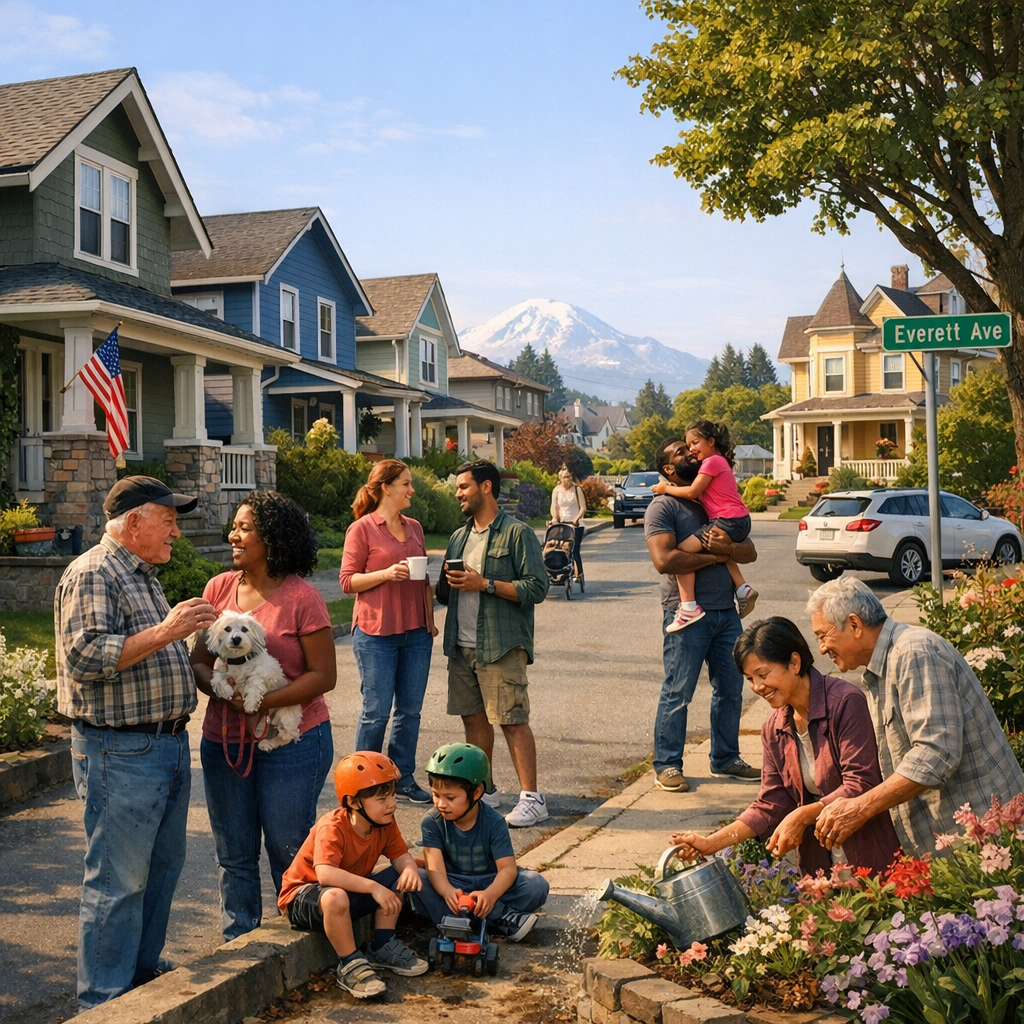
I moved to Everett hoping for waterfront views and community bonds—what I found instead was a tighter budget and a steady hum of worry. Every month I set aside more for rent, and every worry seems to carry another. Yet even in struggle, Everett keeps its heart alive with neighbors, shared meals, and collective perseverance.
The Cost of a Home
Locals talk often about numbers: $1,675 for a median rent, $532,300 for a median home value. For renters, about 58% of us spend more than 30% of our income just to keep a roof over our heads. Homeowners aren’t in the clear either— many households burdened by high mortgage costs. These aren’t statistics; these are the rent delinquencies, the postponed repairs, the second jobs. They’re spouses sharing mattresses, seniors choosing cold over heating.
Vulnerable at the Margins
As costs rise, the people hit hardest are often those least seen. Low-income families, seniors on fixed income, immigrants and folks who don’t have documentation are squeezed the hardest. One person told me she pays what she can, but there’s little left for food or medicine once rent is taken care of. Shelters fill up; wait lists close. Meanwhile, aging housing stock deteriorates.
Middle Housing: A Slow Shift
Everett has begun to allow *middle housing*—duplexes, triplexes, fourplexes, cottage homes—on more lots. These units tend to be more affordable than detached single-family homes. Still, even this promising change feels slow. Incremental. Many of us push for policies that allow more density, more home types, more pathways. Because change—though gradual—is better than stagnation.
Neighborhoods as Lifelines
What keeps many of us going is community. Neighbors sharing yard produce. Elders offering childcare. Churches opening kitchens. People advocating in planning commission meetings. If there’s beauty here, it’s in shared resilience. It’s in a sense of, “We’re in this together.”
What Needs to Grow
We need more than compassion—we need policy. Homes that aren’t just built, but preserved. Emergency shelter that’s safe and respectful. Rent that doesn’t force hard choices. Regulations that support inclusive housing, not exclusion zones. And most importantly, voices at decision-making tables that look like us—every neighborhood, every income level.
I write this not as a defeatist but as someone holding onto hope—the belief that Everett’s future still holds room for upward mobility, for families, for artists, for blue collars, for people just trying to stay. And I believe that together—through stories, through activism, through policy—Everett can become a place where people don’t just survive, but belong.